Showing posts with label David Claerr. Show all posts

Sunday, December 29, 2024

Potential Sasquatch Skeletal Remains Compared to Fossil Record


*This post is written by respected researcher, David Claerr. 

In this essay, I will present an hypothesis on the origins and nature of the wilderness hominins 
variously known as Sasquatch, Bigfoot, and Skunk Ape in the Americas, and as the possibly related Almasty or “relict humans” in the Eurasian continent most notably, Russia.

For the a few decades, I have embarked on research and study that includes field expeditions with 
organized groups and independent forays on my own.

I have been fortunate to not only examine evidence in the form of cast prints, hair, tissue samples, photographic and video evidence, but have also had sightings and encounters with the hominins in the field.

I have also been apprised of some of the interpretation of results from current DNA sequencing, the majority of which is now public knowledge. (As of this updated writing, [Dec. 2024]), more data including nuclear DNA, which is passed on by the male lineage, has been shown to differ from modern humankind.

In the previous hypothesis, I posited that the Sasquatch and modern Humans are significantly more
closely related to each other than any of the higher primates or "great apes," and share a more common
recent ancestor, that may be in the direct lineage of the genus Homo that resulted in the Neanderthal,
Denisovan, Cro-magnon, and modern human. This assessment is borne out by the mitochondrial DNA, inherited from the female lineage, which shows a close relation to that of the modern human.

In this essay, however, I am positing that there is also a close correlation of the Sasquatch to a more 
ancient member of the genus Homo - the family of man - based on the fossil record.

Most of the more ancient fossils of hominins and hominids are mineralized or "turned to stone" to a
degree that any extraction of DNA is virtually impossible. The rather extensive and often bewildering
variety of fossils are classified according to their morphology; more simply put, surface features in the
shape of the specimens that match other specimens most closely.


I spent many hours visually comparing the fossil skulls and skeletal remains of hominins from the earliest ancestors in Africa, through later-dated discoveries in Europe and Asia, using hard-copy books and online resources. A resource that was particularly helpful is the 3D CG library complied by the Smithsonian Institute, with which the computer-scanned reconstructions of fossil skulls can be viewed from virtually any angle.[1]

I also reviewed the scientific literature for other possible correlations, such as the ranges of time the fossil records span, and other incidentals such as the height and physical characteristics of the species. What I was looking for was traits that I have observed myself, and that were also reported by innumerable eyewitness accounts.

Most significantly , I had the opportunity to analyze a skeleton unearthed in Texas. The skeletal remains were not fossilized and appeared to be no more than 200 years old, apparently buried at a depth of about 2 feet .

The results of this study is that I have found a type of hominin that has very close morphological elements in both the unique structure of the cranium and the large, robust skeletal structure. The estimated time-span covered in the fossil record also correlates with the currently accepted theory of migrations of hominins out of Africa into Eurasia and eventually into the western hemisphere.


The specimen that is illustrated above is notable in that it was found in 1921 by Tom Zwiglar, near what is now Kabwe, Zambia. It was first known as "Rhodesia Man" after the former name of the now post-
colonial country. This specimen has many intriguing and significant elements. Dated at 30,000 to 100,000 years ago, It has a curious combination of both ancient and modern characteristics. The ancient features include a prominent brow ridge and a significantly prominent ridge crest along the top of the cranium, and two perpendicular ridges that run up from the sides, forming a distinctive cone-like peak at the top of the skull. Both the prominent, protruding brow and the coned cranium are often cited in reports of Sasquatch sightings.

I can attest to having observed these features as well. However, there are also more modern elements in the Kabwe specimen. such as the volume of the brain-case which, at1300 cc., is within the range of modern humans. The profile of the face is also flatter than more ancient specimens and has the structural support for the cartilage that would form a projecting or "hooded" nose with downward facing nostrils, more similar to the modern human than the ape.

Another remarkable feature of Kabwe Man is that there is an enlarged projecting feature (the occipital
torus) at the rear base of the skull, which serves as a robust support for the connecting muscles of the
trapezius group. This is a trait in common with another very noticeable feature of the Sasquatch or Bigfoot- high shoulders that slope up to the base of the skull, lending an appearance of having "no neck", as it is often reported.

The eye sockets, or ocular orbits of the Kabwe specimen are also larger, rounder and more widely
spaced than those of modern humans. This feature could be evidence of an adaptation to low-light
environments, such as a nocturnal or crepuscular (foraging at dawn and dusk) basis of activity. The
Sasquatch is considered by most researchers to be mainly nocturnal or crepuscular, depending on
geographic region.

One of the aspects of the Sasquatch or Bigfoot that is difficult to conceive is the exceptional height and
body mass- typically reported as between seven and ten feet tall and weighing ranging from 600lbs to 900lbs.


Does Kabwe Man have any traits that correlate with this size? The surprising answer is, yes. Professor
Lee R. Berger of the University of Witwatersrand, extrapolating measurements from the bone
fragments of numerous individuals, estimates that many of them were "giants" typically over (7 ft)
2.13 m tall. [2]

Kabwe Man 

Kabwe Man has been classified as a specimen of Homo Heidelbergenis, fossils of which have been
discovered in Europe and Asia as well as in Africa. (The oldest fossil cranium was discovered in Italyand dated  at about one million years old) Most of the fossils, however, are dated to the Middle Pleistocene, about 780 to 126 thousand years ago.

Hiedelbergensians have notable morphological traits that differentiate them from both the earlier Homo Ergaster and the later Homo Neanderthalensis. However there are also notably discernible differences between Heidelbergensians from different geographical regions that suggest an ability to interbreed with related subspecies of hominins.

This type of hybridizing ability has been also established, through genetic studies, in the Neanderthals, who share DNA with modern humans of Eurasian origins. The import of this is that the Heidlebergensians could be either the ancestors, or a closely related subspecies, of the same hominins as the Sasquatch or Bigfoot that inhabit North America today.

Another important aspect that is currently being researched is the apparent capability of speech in the
Sasquatch, or Bigfoot. Sound recordings dating back as far as the 1970's have provided evidence of
complex vocalizations that follow patterns similar to those found in human languages. The significant
correlation in the fossil record is that H. Heildelbergensis also had the hyoid bone as part of the
structure of the larynx. The hyoid is a roughly horseshoe-shaped bone that is critical for the formulation of distinct syllables and enunciated words.[3] The hyoid bone in H.Hiedelbergensis is another feature in common with the Sasquatch.

Pages Following have the Important Comparisons and Photographic Evidence!


Comparisons of Skull Fragments from the Texas Skeleton to Homo Heidlebergensis

Fragments clockwise from neck vertebra, partial eye orbital socket, mandible.


In the above Composted Image, The Eye Orbit fragment fits precisely on the H. Heidlebergensis brow ridge. The Mandible fragment fits with the same occlusion of the teeth very precisely as well. The Vertebra fragment has been place in the relative skeletal position.

In another significant detail, the Texas Skull's Orbital Socket has a feature not found in neither Modern Humans nor Neanderthals, but is present in Homo Heidlebergensis.

The feature is a protrusion in the middle of the top orbital ridge that dips down toward the center of the Eye.


composite with Hiedelbergensis compared with fragments

As I searched through the Smithsonian 3D CG library, I found no 3D mandibles of H.Hiedelbergensis.

There was, however, an example of a Neanderthal mandible.

Since Neanderthals are chronologically earlier than humans, I compared the Texas Skull mandible with the 3D Neanderthal mandible. Once again, there was a surprisingly close correlation of the specimens.


The Neanderthal and the H.Heidelbergensis share a trait in relation to the mandibular dental arch, or the shape of the curve of the teeth in the lower jaw. Both the Neanderthal and the H, Hiedelbergensis have a flattened arch in comparison with the modern human, whose front teeth form a section of a nearly circular arc.


Along with the skull was, apparently, the entire skeleton, still partially covered. In accordance with State and Federal Laws, the proper authorities were notified. Consequently, the remains were categorized as Native American by the Bureau of Indian Affairs and they were excavated by archaeologists. I was not impressed by their expertise, or rather, lack thereof. The exhumed skeleton was sent to a prominent university in the Eastern US. I have tried to contact the University on their findings with no answers or results.


However, I also have analyzed the proportions of the skeleton using photometrics and comparisons to measurements, including surveyor scale, rule tapes and tape measurements. The skeleton, using the relative proportions of modern humans was in the range of 11ft. Native American?

In a future essay, I intend to comment on the findings of the full- length skeleton.


Though the exact origins of the Sasquatch at present is controversial, there are comprehensive DNA studies on the mitochondrial DNA collected by researchers throughout North America. The entire genome of some individuals ave been obtained, and that data is expected to be released in 2025.

There is the possibility that we will obtain vital clues as to the origin of Man, and knowledge that may help us with medical advances and genetic therapies. Any serious professional in the fields of anthropology or biology should recognize that we have the opportunity for what will certainly be one of the most significant scientific discoveries of the 21st century.

Resources and references:

[1] Smithsonian 3D Digitization> Hominin fossils https://3d.si.edu/collections/hominin-fossils


[2] The Naked Scientists: Science Radio & Science Podcasts, Our Story: Human Ancestor Fossils.
November 2007


[3] Martínez I, Arsuaga JL, Quam R, Carretero JM, Gracia A, Rodríguez L, Human hyoid bones from
the middle Pleistocene site of the Sima de los Huesos (Sierra de Atapuerca, Spain),

Journal of Human Evolution, 2008, vol. 54, no. 1, pp. 118-124. PMID: 17804038

David Claerr's book "Sasquatch Tool Use
(Use the search bar in the upper right of the blog to look up other posts by David Clearr)


Thursday, July 4, 2024

Amazing Cave Find in New Mexico!


This post is by researcher and author David Claerr.

The renowned wilderness guide and adventurer Don Monroe was exploring a cave in a remote area of the state of New Mexico. He was accompanied by his companion and fellow explorer. The cave was extremely well hidden and his long history of exploring caves had him pull back a great degree of growth to enter. As Don was suffering kidney stones at the time, he was getting antsy to leave, but he just had to know what this well-hidden cave had to offer. His companion took a single photo of a room that appeared to be completely worked over and fashioned for the display of some figures. Sadly, as Don's kidney stones became worse, the couple had to rush off to the nearest big city where he spent days on antibiotics and recovering. They headed back to his Montana base and began some other explorations, setting aside the cave find. Don was not sure of the importance of the find, and it left his mind for many years, although he kept the photo his companion had taken. 

The two statue groups each had a pair of figures crouching back-to back, and each pair was connected in the back, having been hewn out of a single block of stone. They sat atop of a raised daiz of a sort made of thin sheets of stone.

The two statue pairings had similar, yet distinct styles, as though created by different artists. The type of stone used is also different.

The elements that the statues had in common were the crouching stances, arms folded across the belly, large heads with bulging eyes, pug noses, and thick-lipped wide mouths with protruding tongues.


The amazing fact is that these peculiar elements are found almost exclusively in the  back-to-back conjoined tiki figures from the Polynesian islands of the Marquesas.

The Marquesas Island chain is in the South Pacific, about the same latitude as Peru. New Mexico is about 5,000 miles to the Northwest.


The montage below is comprised of sculptures from the Marquesas.


Another remarkable comparison is that the smaller pair of the New Mexico figures have the same type of round caps or hats with a distinct brim as do the Marquesas figures. The larger pair from the cave have rounded caps or hair-styles as do other Marquesas figures.

So how could the Marquesan-style  figures make the transit from the Marquesas, far to the north and inland to New Mexico?

There must have been a set of remarkable circumstances leading to this conclusion. 

However, it is an established fact that Polynesian voyagers in ancient times crossed the Pacific from west to east, originating with seafarers in Taiwan. Anthropological, Linguistic and now, Genetic Data has confirmed this. 

The Polynesian culture, originating with the indigenous peoples of current-day Taiwan, after centuries of seas travel, coalesced in the Islands of Samoa, a base from which they eventually made very lengthy sea voyages on large double-hulled canoes or catamarans.

illustration by David Claerr 

The catamarans had sails on pivoting masts that enabled them to sail in any direction, even against prevailing winds, by “tacking” or sailing at a diagonal into the wind. 

The Polynesians also used the ocean currents for travel, drifting with the current, lowering their sails. 

The Marquesas, at the farther eastern edge of their range were probably settled by Polynesians by about 800 AD/CE.

By sailing north from the Marquesas, the voyagers could catch the Equatorial Counter Current, which would carry them from west to east, enabling them to reach the shore of South America, most directly to Columbia.

The return trip was accomplished by riding the Southern Equatorial Current directly back to the Marquesas. The Trade Winds also blow from east to west in that area of the Pacific, and would speed up the voyage considerably.


A very interesting and significant result from a comprehensive Genetic Study revealed that Native South Americans from the region of Columbia had reached the Marquesas and interbred with the local populations, probably about 1150 AD/CE. 

Since the genetic input from the Colombians indicate that just a few persons had interbred, it is most likely that they were brought from Columbia to the Marquesas. Alternatively, voyagers from Columbia may have reached the Marquesas.

It is noteworthy that there was a significant amount of maritime activity along the western coast of Peru, Ecuador, Columbia, Panama and Mexico that was well established before the arrival of the Spaniards and other Europeans.

For example, there is the account of the Incan prince Topa Inca Yupanqui, who voyaged with a fleet of thousands of hand-picked sailors on a voyage lasting at least nine months. He went in search of two islands that two merchants (likely Polynesian) had informed him about. Historians surmise that the islands Topa Inca Youpanqui reached were Mangareva and Pascua in Polynesia.

Another example of ocean travel was the modern voyage by Thor Heyerdahl on a primitive balsa wood raft, the Kon Tiki from Peru to French Polynesia, which is relatively near the Marquesas.

Paths and Timings of the Peopling of Polynesia from Genomic Networks

On another trip, while visiting Easter Island, Heyerdahl found depictions of what appear to be reed boats with masts and sails. The one pictured below is carved on the stomach of a moai.


So it seems plausible that there were a significant amount of ocean voyages, not only for exploration and colonization, but also for trade and commerce. 

The trade networks were most established along the pacific coast, ranging from South and Central America up through Mexico and possibly to California. 

Voyagers traveling north along Mexico's Pacific coastline, would eventually sail into the Sea of Cortez (or Gulf of California) where the Colorado River empties into the sea.  From the Colorado River delta, smaller craft, such as canoes could travel north along the Colorado, and head east along the Gila River from where it flows into the Colorado.

The Gila River crosses through Arizona and continues through New Mexico. The headwaters of the Gila would be only 35 to 75 miles overland from the current possible locations of the cave, which has yet to be determined exactly.


Therefore, traders following this route, or sculptors  from the Marquesas could reach the cave in New Mexico. The sculpted figures could have been a trade item, or Marquesan sculptors could have carved them on location. 

If the cave, together with the sculptures, can be relocated and thoroughly analyzed, many elements of this mystery could be determined, such as:

Is the stone local, or of Marquesan Origins? Perhaps dating by Optically Stimulated Luminescence (OSL) could place the time period the images were placed in the cave.

Other methods, such as Uranium-Thorium dating may determine the age or time of creation. 


It is also notable that the cave in New Mexico seems to have other carvings and symbols on the walls and surfaces that may have archaeological importance. The cave should be subject to a comprehensive search, using metal-detecting equipment, fluoroscopes and UV scanning devices, among other techniques.


(Note the cave surface on the left has a hand carved in bas-relief that resembles the hand of a tiki placed on the abdomen of a figure. Perhaps it is a part of a larger sculpture.)

In the future, there may be an expedition to re-locate the cave and a real-time documentary film produced. Follow Sharon Day on this blog and also on Facebook for more developments!

Below is the original photo - 


Even the interior of the cave looks worked by chisel, as well, showing a carved ledge. As the two did not go further into the cave and had to get Don immediately to a hospital, there is no telling what all the cave was used for and by whom. It is hoped with more details of the location, this can be discovered as one of the most vital ancient finds in America. 

Ghost Hunting Theories will keep you up to date.


Friday, April 5, 2024

The Haunted Crescent Hotel


Today's post is by researcher David Claerr. Check out his Sasquatch Tool Use book HERE.

Monday, March 4, 2024

The Giants of Anatolia by David Claerr

art by David Claerr

This post is by respected researcher David Claerr. He is a graphic artist, as well as intense researcher of Bigfoot and ancient giants. 

Anatolia is a large peninsula with the Mediterranean Sea to the South, The Black Sea to the North, and the Aegean Sea to the West. The region has a long and varied history, having been occupied by several major cultures, including Egyptian, Greek, Roman, Byzantine and Ottoman empires.

Throughout a period lasting perhaps 1500 to 2000 years, beginning with the Egyptian occupation, settlers of all these cultures practiced a similar type of burial for important overlords or prominent and wealthy citizens. Some of these overlords or their warriors were giants!

These burial sites are not marked by the more familiar structures of tombs, mausoleums, marked graves, etc., as are more common in contemporary sites or cemeteries in the area or in the Middle East or Europe at large.

Often the burial sites are inconspicuous, and blend into the hilly and boulder-strewn terrain of the Anatolian peninsula. But there are often many items of treasure hidden at the sites: Gold and Silver in the form of figurines and minted coins. There is jewelry inlaid with precious stones: emeralds, diamonds, rubies, sapphires and more. Artifacts such as daggers and knives, vases of metal and ceramic, and a multitude of other objects, both decorative and utilitarian.

In recent times there has been an unprecedented amount of these treasures excavated using new state-of-the-art metal-detecting devices. Many of the persons using these devices are amateur treasure-hunters. So their activities, though perhaps legal in some areas, certainly pose an ethical dilemma: The areas being excavated are not properly studied by professional archaeologists, and, most likely, many important details of history are being lost.

However, the actual graves, in most cases, are not exhumed. The treasures most often discovered are in caches near the actual graves, but separate from them. These caches are often placed under boulders, in cracks or cavities in the rocks or in the typical limestone outcroppings.

In some cases, the treasure is place inside or artificial rocks and boulder created using a mortar made of sand, gravel and limestone cement. Many of the artificial boulders are indistinguishable from the nearby real boulders, and their true composition can only be seen when they are broken-up.

Why were these treasures left at grave sites over such a long period of time? Often they may be a person's own possessions, combined with coined money and other valuables, perhaps to sustain them in a perceived afterlife. The could also be a votive offering to a deity or deities depending on the beliefs of the culture of the time.

The evidence that many of the burial sites were those of Giants are best illustrated by the fact that some of the jewelry excavated include huge gold rings, often inlaid with large emerald stones. The circumference of the rings are often from 1.5 to 3 times the circumference of a modern human's finger as evidenced from these screenshots:


The largest of these three rings is 3 times the circumference of an average modern human. By logical inference, that ring's owner would have been in the 8 to 10 foot range of height.


This gold ring has a very large emerald stone inlaid in a heavy gold embrasure.

Mud is still clinging to the surfaces.


This gold ring, also inlaid with an emerald, has a circumference about 2.5 times the size of an average modern human. By inference, the stature of the owner would have been in the 8 to 9 foot range. This band of this ring has been divided in half to ease removal and placement on the finger.


A view of the emerald inset of the ring in the previous screenshot.


Many of the current treasure hunters refuse to exhume the main graves because of religious convictions. So although they have removed the votive offerings and treasures, professional, trained archaeologists still have the ability to access and excavate the sites, which may contain skeletal remains of these giants, as well as armor and armaments, and other accessories.


GPS coordinates of the sites may have been recorded by the treasure-hunters and could be forwarded to archaeologists to locate the sites.


The actual height of the Giants could be determined from the skeletal remains, and other scientific studies, such as DNA sequencing, could be applied as well.


The area of the Anatolian peninsula is located in the modern country of Turkey, or rather, Türkiye , as is the preferred spelling. I suggest that interested parties contact appropriate government agencies and request that these sites be investigated, and that the treasure-hunters be contacted for information. Many of the treasure hunters have online accounts with YouTube and make regular posts.


An official Agency :


SARAT – Safeguarding Archaeological Treasures of Türkiye


David Claerr books on Amazon LINK 


Friday, August 11, 2023

Cahokia Giant


art by David Claerr


*This post is brought to us by researcher, author, and artist David Clearr. He is one of my favored researchers and go-to's especially for the ancient giant and Bigfoot cultures.

Monday, June 5, 2023

The Night of the Bigfoot: A Terrifying Visit by a Sasquatch


Today's post is written by David A. Claerr, a Bigfoot researcher, artist, and author whose work I hold in highest regard. 

The following is an account of one of the first encounters that I had with a Sasquatch:


My best friend, John, built a homestead in north central Ontario, Canada, on the western edge of Algonquin Provincial Park. The nearest town was Huntsville, which was about 80 miles away. The land on his property had thickly wooded, rolling hills, a creek and a sizable beaver pond. Deer and black bear were in abundance. 

I worked with my friend one summer to help finish his house, putting up siding, shingling the roof and digging a cellar for his pump house.

John's dog was an exceptionally large, malamute/wolf hybrid named Silverbear. He was so strong that he could break a logging chain. To secure him, John had to thread 3/8 inch steel cable through the logging chain and padlock it around his neck. One time we gave Silverbear a whole leg-joint of a cow to chew on, and to our surprise, he crunched up the whole thing and swallowed it! 

Silverbear would go after the black bears if he was loose and drive them off the property.
John's nickname was "Man Mountain". Although he was not physically huge, he packed a lot of dense muscle on his 220 lb frame and had unbelievable strength and energy. I once saw him defeat a 350 lb 
linebacker that assaulted him. It goes without saying that he was no wuss. 

John's wife Linda, was a high-spirited adventurous type, resourceful and energetic. The three of us worked hard to finish off the
house before the cold weather set in during late Autumn.

The main structure of the house was complete and we were working on painting and decorating the interior. The nights grew longer and colder and we began to turn in not long after sundown. I normally slept like a log, although any unusual noise would awaken me. On the night of the Bigfoot we had a big 
meal of Stroganoff, and I was looking forward to a nice, restful sleep.

But sometime that night, probably between 10 and 11 PM, a, low indistinct sound aroused me from a deep slumber. My first impression was that I was hearing the distant rumble of a train. That seemed peculiar since there was no rail line anywhere nearby. I heard Silverbear outside begin to growl as well.

He had a deep growl himself, but the rumbling sound was deeper still, almost like infra-sound that you can feel more than hear.

The low rumbling gained in volume and gradually raised in pitch. It seemed to be drawing nearer and sounded more like an animal sound, very deep and with powerful reverberations. In fact, at certain frequencies the windows rattled and the wallboard shook. It was suddenly very alarming, and Silverbear, paused in his growling as if he was disconcerted by the noise. 

The volume raised to a tremendous sustained bellow, raising in pitch from a howl to a screaming wail that I could feel in my teeth. Silverbear dived under the house; I could hear the chain scrape on the foundation piers. The wail raised in tone, apparently to a frequency that only Silverbear could hear, and he squealed and whimpered as if it hurt his ears.

There was a period of silence of about 30 seconds. Then the howl began again, this time even nearer and louder. Now, I've been right next to an African Lion (caged) when he roared, and once was chased through a pasture by a bellowing bull. I've had a big mountain lion screech and growl as it circled
around me threateningly. I've also been close to a huge alligator as it bellowed. But none of them even came close to the sheer volume or the palpable sonic pulse of this vocalization.

The effect of the incredible sonic assault was amazing. It triggered an astounding mix of paralyzing fear and confusion. It seemed to penetrate the very core of my being. 

By the third sequence, I was unable to move a muscle. I couldn't breathe and felt as though my heart had almost stopped. I also had a sensation of being cold, as though I was nearly freezing, even though sweat rolled down my forehead into my eyes. I lay on the bed as though petrified. The only thing I could move was my eyes. My body was locked in a rigid catatonic state. It seemed like the ultimate state of terror that I could endure
without passing out completely.

Meanwhile, in the other bedroom, John and Linda were experiencing much the same effect. Linda felt the same terror, paralysis and freezing sensation. John felt a similar shock, but was able to roll out of bed and belly-crawl over to the closet where he kept his rifle. He was only able to hold the rifle as he lay flat on his back, staring toward the window, which was covered with a bed sheet.

The room that I was in did not yet have any curtain or window shade. My head was at the end of the bed near the window. There was a little bit of light from a waning moon but overall it was a fairly dark night. With effort, I rolled my eyes toward the window. I could only see out of the corner of my eye, and the stinging sweat blurred my vision. But in one of the periods of silence, I thought I saw a pair of
glimmering red eyes peering in the window. I seriously questioned whether the whole episode was a hallucination. I also thought it might be a supernatural manifestation, like a demon or malevolent spirit.

But hearing Silverbear whimper and squeal made me realize something was occurring to him also in reality.

John also saw a huge shadow pass across the bed sheet over the window. This happened twice, and he nearly pulled the rifle trigger on the second pass, but something made him hesitate. He felt dazed and nauseated, and by that time also could barely move.

At last, the bellowing, howling scream ceased. We all lay there, in a state of slowly ebbing terror. I tried to force by breathing and found myself drawing air through clenched teeth. Eventually the locked muscles began to relax, but I still felt extremely weak and nauseated. 

After an hour or so I could hear Silverbear scratching on the door and begging to get in the house. After that I just lay in a state of 
shock, in utter dread that whatever it was would return.

Finally, at about dawn, John came, literally crawling into my room. He was very pale and asked me if I was all-right in a hoarse whisper. I replied and asked if he had heard the screeching too, and he shook his head yes.

I slowly sat up in bed. My limbs ached and I had a terrific headache.

Eventually, I shuffled out to the kitchen. I looked out the front window. I was surprised to see that the entire landscape was covered in hoarfrost from the grass on the ground to the leaves on the tallest trees.

Hoarfrost is crystallized ice that forms feather-like growths about an inch long. 
That day it looked similar to a snowfall.

When I opened the front door to look out, Silverbear forced his way in, chain and all. He hadn't been in the house since he was a puppy, and he was obviously still scared out of his wits. We unchained him and made him lie down in the corner as we talked about the bizarre and frightening night we all had.

After some coffee and toast, John and I decided to grab a couple of rifles and check out the property.

We still felt shaky as we stepped out into the bitter cold. It was eerily silent outside. Not a bird twittered nor a squirrel stirred. The hoarfrost that formed in the pre-dawn hours had covered every thing, and we could see no tracks or sign of anything at all. However, there did seem to be a rank, sour smell outside the house. 

Silverbear could not be coaxed to come outside so, we couldn't use him for tracking.

We decided against going out to the woods, it was too cold and neither of us felt up to snuff that morning.

At the time, none of us knew what to make of the previous night. Not one of us even thought of the possibility of a Bigfoot. In fact, we were more disposed to think of it more as a malevolent spirit than an animal. 

John and Linda actually lit candles, prayed and even sprinkled the outside of the house with
what they called "holy water" that they kept from a visit to a Catholic shrine. 

We were somewhat isolated, and had no telephone, so we didn't have an opportunity to discuss it with anyone for a few weeks.

It wasn't until some time later, when I was reading about Bigfoot encounters in Russia that I made the connection. There were several reports of the bellowing-howling-screaming sequence, some concurrent with face-to-face sightings. The people involved experience the same terror and paralysis, nausea, headaches and inability to breathe. Some even reported the sensation of the heart functions being severely repressed. In fact, peasants of the Russian interior ascribe a hypnotic or even magical power to the Bigfoot. Some report similar sensations even if they can't see or hear the Bigfoot when it is very close, but concealed in bushes or behind rock formations. (The reports also mention the nocturnal habits and red eyes that have a reflective retina similar to that of a cat.)

There is another element that bears consideration. All animal lifeforms generate an electromagnetic field. Many predators, for example, sharks, can sense the electromagnetic pulses from their prey and
home in on them. The EM field is stronger in close proximity and a creature with a large mass can generate a powerful field that extends outward many feet from their body. 

Have you noticed how you can interrupt your TV's reception by walking a few feet from it, or conversely, bring the TV screen into focus by touching the antenna? That is due to the electromagnetic properties of your body.

There are documented reports of people who can accidentally set off alarm sensors in airports, supermarkets and department stores even though they have neither metallic objects nor electrical devices on their person.

Consider that a mature Bigfoot could be up to nine feet tall and possibly weigh in excess of 1200 lbs.

They are reportedly massively muscled and adapted to extremes of cold. This configuration would result in a creature with a high metabolism that naturally has an immense electromagnetic field surrounding its body. It is quite possible that if a person was in close proximity to the Bigfoot's EM field, it would conflict with that person's own EM field and disrupt that person's functioning. This
could account for the headaches, nausea and confusion that people feel, even if they are not particularly frightened by a Bigfoot's presence. If the Bigfoot was right outside my window, I was only about three feet away from him.

Other reports from both Russia and the U.S. and Canada mention the Bigfoot's habit of breaking and bending sapling trees at about 8 to 10 feet from the ground, then twisting and forcing the boughs together into a rude shelter of sorts. 

Earlier in the summer, we saw a structure just like that down by the beaver pond. It formed basically a roughly roofed hut with no walls. I first wondered if the beavers had been cutting the saplings some how, but there were no toothmarks, and beavers generally do not climb trees. 

Inside the structure the earth was shallowly dug out and packed down to a hard, bare surface. In the winter the snow would collect on the roof and drift up on the sides to form a semi-enclosed area about 8 feet in diameter.

My hypothesis then, is this: John had inadvertently settled in a remote wilderness area that was either a wintering grounds or part of a nomadic migratory route used by the Bigfoot. The seemingly enraged howling was perhaps an attempt to scare us off, or just an natural reaction to the presence of interlopers. There was no actual physical violence to the property or our persons, although the Bigfoot
could have easily smashed through a window or wall.

So, let those of you who are in pursuit of the Bigfoot consider NOT shooting to kill. Why not instead arm yourself with a tranquilizer gun and carry grizzly-strength pepper spray (commercially available online) for defensive purposes? After all, a live specimen would be infinitely more valuable than a dead one.

Besides, some hunters faced with a Bigfoot suddenly feel as if it would be something close to homicide to shoot one. 

Maybe they are right.

👣👣👣

David has other posts on this blog that can be found in the search bar. As well, please be sure to check out his books. You can find them online including Amazon. DAVID CLAERR BOOKS

Saturday, December 11, 2021

The Origins of Sasquatch or Bigfoot in the Fossil Records


This is a post by David Claerr, a researcher and author whose evaluation and input are highly regarded by myself and many in the field.


This is an excerpted essay reprinted by the Author's Permission from "Sasquatch Genesis"; a copyrighted work by David A. Claerr, available on Amazon Books: LINK

Wednesday, April 22, 2020

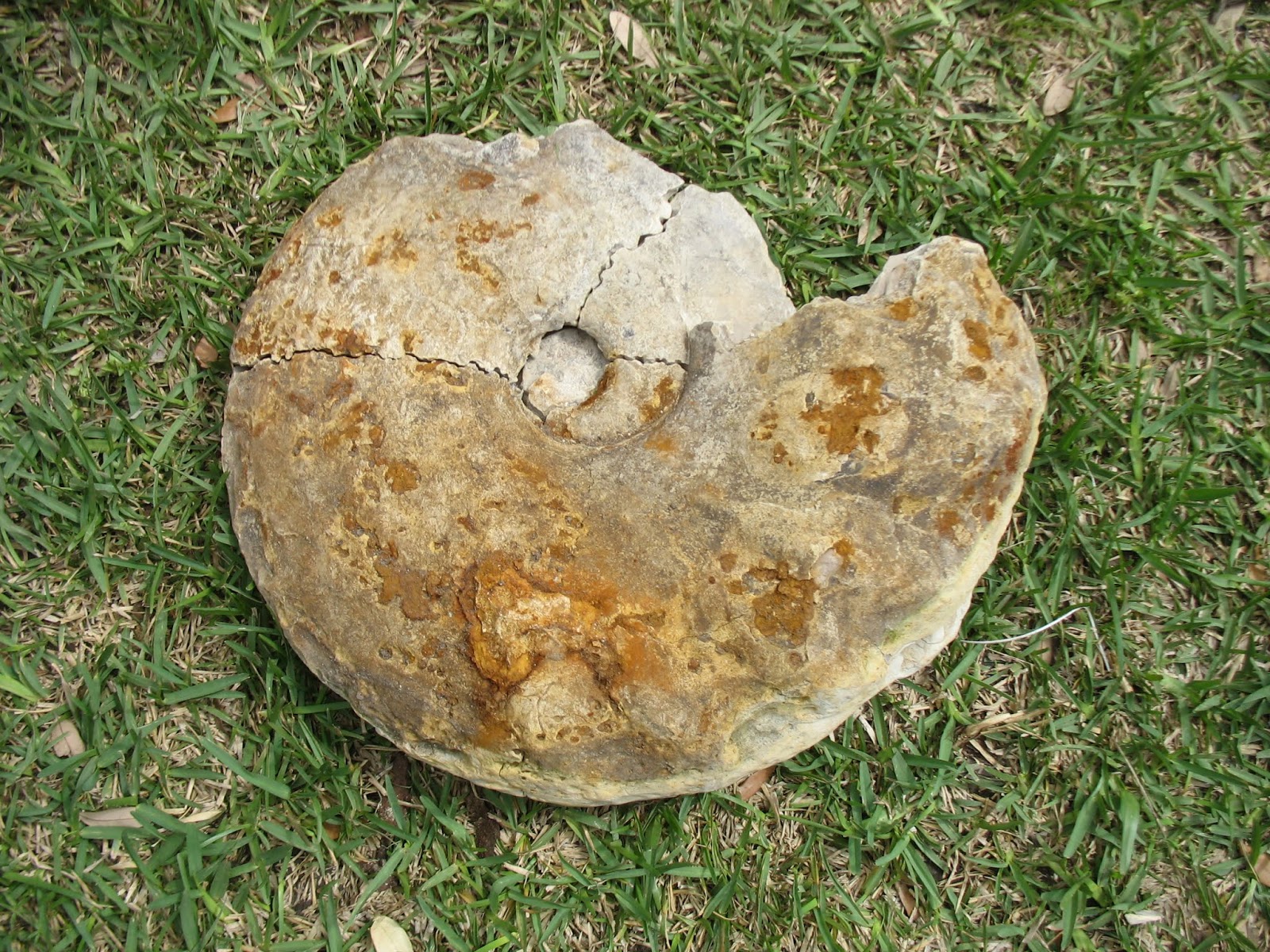
David Claerr: Fossil Hunting


This post is by researcher and author, David Claerr.

This specimen was in a loose, crumbly grey limestone matrix and was exposed by recent high floods. It was about to be washed into the creek. Although it was heavy, it could be just picked up since it was pretty much detached from the matrix it was half-nestled in.

I went on a pre-dawn foray, still dark at 4:00 AM, equipped with rope I made from chain-braided "mule tape," an army surplus canvas tote bag, and our old jogging-style baby stroller. I go early so no one bothers me and I don't alarm anyone when they see me scrambling up and down cliffs and mucking around with weird-looking gear.

First I let the tote bag and rope down the sheer drop and tied the rope to a sapling. Then I went upstream where there was a large tree on the precipice with roots hanging downward and crosswise enough to clamber down the cliffside. I bagged the pieces with some packing, scrambled back up the cliff and hauled it up by the rope. Then, into the baby stroller and back a couple miles to the car.

( While I was making my way back to the trail, I saw some eyes in the dark deep woods-reflecting a greenish light. Probably a few deer, based on the height, but sort of spooky none-the less)

This fossil is about two feet wide and probably weighs 60 lbs. A very interesting element about this specimen was that it was already cracked on a fairly regular series of segments along a fractal progression and the joints were like three-dimensional puzzle pieces. On the inside, the fossil rock is a different color, type and texture with a fluted pattern. I think this might be the fossilized remnants of the creature in the shell. The fluted pattern might be the recesses where the individual tentacles are housed.

Another feature was the way the interior of the spiral was progressively thinner as well as smaller, as it was from earlier, younger development of the ammonite. Although a bit eroded, the thickest parts have a pronounced surface of patterned ripples.

At some point I may donate this fossil to a museum or natural history exhibit, which is something I have done in the past as well.


Saturday, March 14, 2020

Can We Treat and Defeat the Coronavirus Pandemic?


**Guest Post by David Claerr**


Effective Coronavirus (Covid-19) Treatment

Preliminary Explanation and Disclaimer: The purpose of this article is to propose a potentially viable method for treatment of the Coronavirus in infected patients. The presentation of the method is to engender interest and investigation into the application of a combination of two readily available and inexpensive substances that work synergistically to mitigate the replication of the virus within infected cells. The target audience is ultimately health care professionals, who have the expertise and equipment to conduct comprehensive tests on this type of therapeutic regimen. The intent of this article is to spread the awareness of the potential of the treatment throughout the general public, with the hope that the message with be also transmitted to professionals in the fields of epidemiology, infectious diseases, pharmaceuticals, etc., or any individual or agency that is working to mitigate the spread of the contagion, and provide effective therapies for infected patients.

The first of the described substances (Chloroquine) is a pharmaceutical that is available only with a qualified physician’s prescription and should only be administered under the direction of a qualified and authorized health care provider as directed by a physician with an MD (Medical Doctor) credential, or by those with greater expertise.

The current hard science behind the proposed use of the therapeutic substances will be provided toward the end of the article, in a subsection with links and descriptions. The following is a brief summary of the processes involved:

The first element in the therapy is the use of a prescription pharmaceutical that has been successfully and safely used for the treatment of malaria for many decades: Chloroquine.

Chloroquine has components that are chemical analogs to the first major pharmaceutical used to treat malaria, Quinine.

The second element that works synergistically with Cloroquine is: Zinc. Zinc that is absorbed within cells and retained in the intercellular fluids effectively prohibits the duplication of the virus by interferring with the replication of the RNA of the Coronavirus, which comprizes the Coronavirus genome.

The reason that Chloroquine and Zinc are an effective antiviral combination is that Chloquine is a known Ionophore of Zinc. The action of a Ionophore is that it enables an ionic element, in this case, Zinc, to be transmitted though the ion barrier of the cell wall membrane.

Zinc is an essential mineral for the health of the body, which cannot be stored in the body for prolonged periods of time, and must be periodically replenished by consumption of foods or supplements which contain zinc. Zinc supplements, most notably, zinc compounded with Chelating agents (organic or amino acids) that form ionic bonds with the zinc, have proven to be effective in boosting the immune system and also provide an anti-viral effect within the intercellular environment.

Chelated Zinc supplements can be generally used at the dosage recommended by the National Institute of Health (American), in levels of between 9 and 13 miligrams daily by an average person in good health, but it is recommended that any person should first consult with a physician before using Chelated Zinc or any supplement, particularly in the case of pregnant or nursing females. The appropriate use of Chelated Zinc (even without Chloroquine) could potentially lesson the severity or degree of infectiousness for a person exposed to the virus. The combination of Chelated Zinc with Chloroquine may be the most effective therapeutic regimen for the disease.

Another highly interesting correlation to this proposed therapy is that South Korean physicians who are developing successful treatments for more-severe cases of Coronavirus (Covid-19) are employing the use of Choloquine or the related Hydroxychloroquine. This therapy, though effective, in and of itself, at present, does not include the concurrent use of Zinc or Zinc supplements. (link to follow)

The link below leads to a comprehensive scientific paper entitled “Chloroquine is a Zinc Ionophore” published on the PLOS One website. PLOS One is published by the Public Library of Science, and is a peer-reviewed journal that covers research in the realms of science and medicine.

https://journals.plos.org/plosone/article?id=10.1371/journal.pone.0109180

The link below leads to an article published by the Korean Biomedical Review entitled “Physicians work out treatment guidelines for coronavirus”. The article descibes in detail the use of Chloroquine and Hydroxychloroquine for treating coronavirus patients by physicians in South Korea. 


Note from bloggers: We appreciate David giving a new insight into this health issue. David's viewpoints are his own and the blog is allowing him to voice this to an audience curious to learn more.

Tuesday, June 25, 2019

Saturday, June 2, 2018

Bigfoot Researcher: David Claerr


Today, I'm covering yet another Bigfoot researcher I greatly admire. Some researchers bring to the table an interesting set of background. Perhaps they have a medical background or they are primate experts, maybe they are outdoorsman and survivalists or study the Native American culture. In David's case, a combination of interest in ancient studies and art have made him not only a fascinating human being, but a very well rounded researcher.

Tuesday, May 22, 2018

A Tale of Ghostly Greed: Guest Post by David Claerr

How I perceived the avaricious ghost


A Tale of Ghostly Greed
        a guest post by David A. Claerr


Wednesday, November 29, 2017

Buffalo Bill and the Bigfoot Bone


Native Americans of the Pawnee tribe show William F. Cody a specimen they have found.
Illustration by David A. Claerr


*This is a special guest posting by one of my favorite researchers, David Claerr. You can type his name in the search bar to the right to find his other articles.*

Wednesday, November 22, 2017

The Lake Worth Monster


Art by David Claerr

**This post is a special guest posting by a researcher I greatly respect, David Claerr.**

Among all the reported sightings and contacts between humans and the legendary Sasquatch, also called Bigfoot, one of the most fascinating and lively documented cases occurred in the community of Lake Worth, just to the northwest of Fort Worth, Texas. Not only did over a hundred people report seeing the creature, in some cases there were up to forty people who saw it at the same time and place, and among them were police officers who noted the episode in their official reports.